
Why planograms drift, and how monitoring catches it
A planogram is the blueprint for a shelf: what goes where, and how much of it. Sandwiches and eggs sit at adult eye level. Sweets sit lower, at a child’s. The plan keeps the shelf orderly, helps sales, and lets a shopper find their yogurt where they expect it.
Planogram compliance is how closely the real shelf matches that plan. A shelf is fully compliant when four things hold: the product is present, the facing count is right, the left-to-right sequence follows the plan, and the price tag matches. Keeping all four true across a chain, every day, is the hard part.
In a live store, that order rarely lasts a day.
Why planograms break down
The plan assumes a stable world. Real stores are not stable.
- Supply gaps. A supplier ships late or short. Trucks break down and warehouses flood, and the shelf can’t hold what never arrived.
- Out-of-stock. Popular items sell out, and staff may not restock for hours.
- Customer behavior. Shoppers put things back in the wrong place. A carton of milk ends up in the candy aisle.
- New products and promos. Shelves get rearranged fast, before the planogram is updated.
- The human factor. Staff sometimes arrange products for their own convenience, and the plan slips.
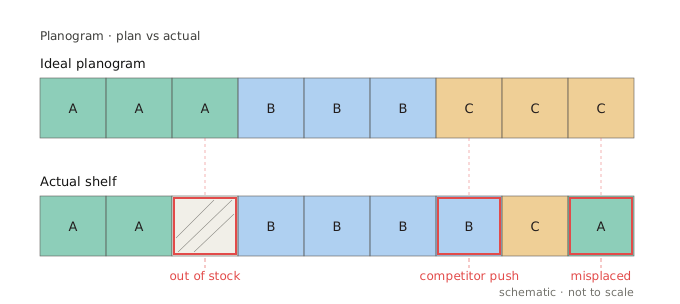
Three ways it breaks in practice
The battle for shelf space. A 50-store chain plans three chip brands side by side. The layout never lasts a day. Each brand sends its own merchandisers, who visit at different times and push competitors aside to widen their own facings. The planogram becomes a turf war, and compliance slips by evening.
A viral spike. On Friday night a creator with 2 million followers posts about one energy drink. By Saturday morning 12 stores are sold out, 18 have 3-5 cans left, and 8 still have stock sitting in the back. Shoppers arrive, find empty shelves, and leave bad reviews. Weekend demand jumps around 15 times. By Monday, when the buying team reacts and restocks, the trend is over. Planograms update monthly, and a trend can last days.
Missed sales. A 35-store chain shows the item in stock. The website says available. The shelf is empty. The product is in the stockroom, or hidden behind other packs, or moved somewhere a shopper can’t find. Periodic manual checks miss all three.
How monitoring responds
A monitoring system continuously compares the planned layout with the actual shelf. When it finds a mismatch, a missing product, a misplaced one, or an empty facing, it logs the issue and alerts the floor. These are the deviations we track in a planogram-compliance pilot.
It also builds analytics: where layout errors happen most, which products get misplaced, and when violations tend to occur. That turns single fixes into systemic ones. Sometimes the data shows the planogram itself is awkward, and one store needs a different layout.
The system also sorts critical issues, an out-of-stock bestseller or a broken promo display, from acceptable drift. Staff then know what to handle first.
The point
Treat the system as a tool. Its job is to save people time and flag what matters. The real value is the analytics: which products keep landing in the wrong place, where the assortment falls short, which stores struggle most.
If a planogram is violated constantly, look at the plan before the staff. Update layouts to match how customers actually shop and how staff actually work. The advantage of automation is speed. It sees a problem and flags it at once, so the fix doesn’t wait for the next shelf-monitoring walk. When a flag turns out wrong, treat it like any recognition error: data for the next retraining.